



Considerations for
Enterprise Adoption
of SD-WAN
For the large enterprise facing the growing need for faster and more agile IT networks, SD-WAN is said to be the next technology must-have. With Cisco indicating that global IP traffic will increase nearly three times over the next five years, and the proliferation of Cloud and SaaS (Software as a Service) throughout the business world, SD-WAN promises fresh solutions to help aging enterprise networks keep up with the pace. But what are the benefits of SD-WAN, what might it look like, and what are the considerations?
First, the current enterprise:
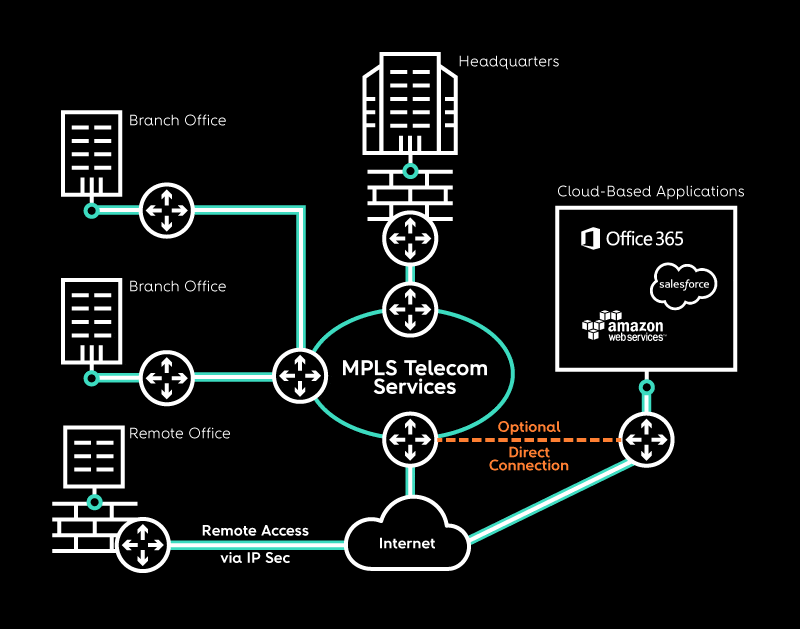
Today, basic enterprise IT architecture consists of IP/MPLS VPN services with hubs and branches connected to each other and then to the internet and cloud software services such as Microsoft 365 and Salesforce.com. Generally, traffic between branches and the Internet and Cloud are routed through a centralized hub. But with this rather constricted configuration, heavier loads demanding more bandwidth and hardware circuits increase expenditure, and traffic is slowed.
SD-WAN can enhance this architecture. One way is by replacing the need to route all IP traffic through a central hub with the ability to connect with links from branches directly to the Internet and Cloud. This speeds traffic and reduces transport costs.
What else can SD-WAN do?
SD-WAN, being “software-defined,” is a part of the software-defined technology movement, SDx, which reduces the amount of hardware required. The software definition aspect of SD-WAN also simplifies the management and maintenance of a network by allowing virtual deployments and expansions.
In addition, SD-WAN is transport agnostic, so it works with existing transport systems such as broadband and cable, which do not need to be replaced.
Security is integrated by SD-WAN, wherever deployed, for branches, and remote access. And improvement for both the SaaS user experience, with its ability to prioritize application traffic and SLAs with its traffic management prioritization, are maximized with SD-WAN.
SD-WAN can reduce costs because:
- More expensive MPLS is not required, and broadband is allowed.
- Bandwidth can be increased and is scalable at a much lower cost.
- Software-defined deployments are less expensive due to less hardware expenditure.
- Dependency on physical circuits leased from service providers is reduced.
What would SD-WAN look like?
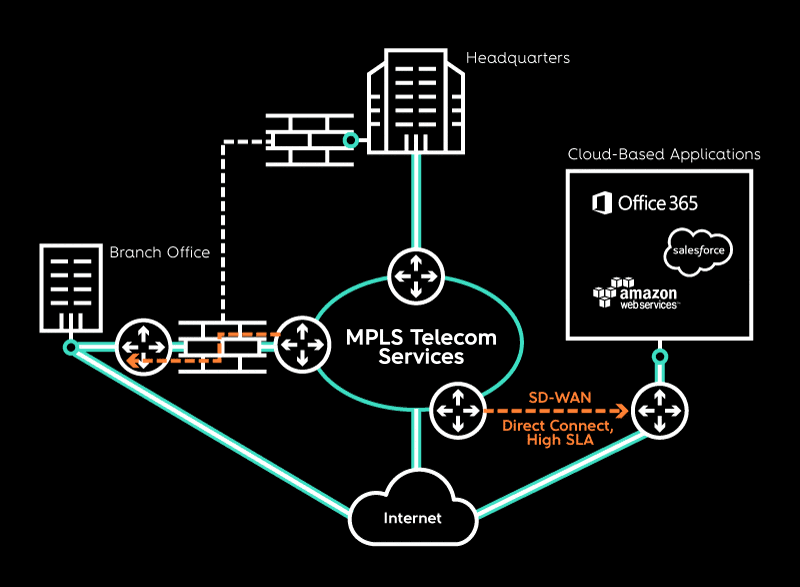
Taking the example of a basic enterprise WAN described above, a secure SD-WAN branch can optimize local traffic with a direct connection to the Internet and then the Cloud, bypassing the MPLS.
Another alternative for a secure SD-WAN branch would provide an optimized regional connection to the Internet and Cloud through the MPLS, but not through a distant hub.
A third secure SD-WAN branch option would have a direct connection between the MPLS and the Cloud, bypassing the Internet, which would be a high-SLA connection.
Implementation Considerations:
Some things to consider when thinking about an SD-WAN implementation are the current architecture, operations, network, and application usage, plus projected growth needs. Also, the current and projected IT staff skill set, location, and availability should be factored into the planning. IT staff also plays into the decision whether to outsource deployment or to do it in-house.
With the current architecture in mind, most large enterprises would expect to deploy SD-WAN over several years. Note that for established enterprise networks, the best ROI will come from deployment at the network edges rather than from the replacement of existing IP/MPLS VPN components.
An analysis of the current network and application usage should be done to determine where SD-WAN can promote the most optimization. Again, for deployments in established enterprises, these areas will be at the edges of the network, or at the “last mile.”
As for the decision to outsource implementation, questions regarding IT staffing needs and training will matter. If planning for in-house deployment — does the enterprise have the necessary expertise, will staff augmentation be needed, and if so, for how long?
At this early point in the SD-WAN revolution, an enterprise organization can reap its benefits by giving serious consideration to all aspects of their current and desired future state architecture. Taking a close look at current WAN architecture, studying network and application usage, IT staffing, and future growth projections will form a solid base for a successful SD-WAN implementation plan.
