

Vulnerability Should Never Be An Option:
Things You Should Know About Disaster Recovery
If you're just starting to think about a BC/DR strategy, or if you're in the process of building one, read on for some answers to common questions.
Q: "Disaster recovery" seems pretty self-explanatory. Is there any difference between that and "business continuity planning"?
A: Disaster recovery is the process by which you resume business after a disruptive event. The event might be something huge-like an earthquake or a hurricane, or something small, like corrupted software caused by a computer virus.
Many business executives are prone to ignoring "disaster recovery" because disaster seems an unlikely event. "Business continuity planning" suggests a more comprehensive and strategic approach to making sure you can keep operations going and fulfill your business' obligations. Often, the two terms are married under the acronym BC/DR. The keys, in either case, are having in place effective preparation, strategy, and resources.
Q: What do these plans include?
All BC/DR plans need to encompass how employees communicate, where they will go, and how they will keep doing their jobs. The details vary by the size and scope of a company and the nature of its business: one BC/DR strategy does not fit all. For some businesses, issues such as supply chain management are most important. For others, where information technology is most important, the plan will primarily focus on systems recovery.
Q: What are the top mistakes that companies make in disaster recovery?
- Inadequate resource auditing. Everybody thinks they know what resides on their networks, but most people don't really know how many servers they have, how they're configured, or what applications reside on them. Asset management tools can help here, but are certainly less than foolproof.
- Failure to bring the business into the planning and testing of your recovery efforts. Much of this is caused by not having funding allocated for semiannual testing, and time constraints that don't allow companies to engage in the planning process properly.
-
Failure to gain support from senior-level managers. The largest problems here are:
- Not demonstrating the level of effort required for full recovery.
- Not conducting a business impact analysis and addressing all gaps in your recovery model.
- Not building adequate recovery plans that outline your recovery time objective, critical systems and applications, vital documents needed by the business, and business functions by building plans for operational activities to be continued after a disaster.
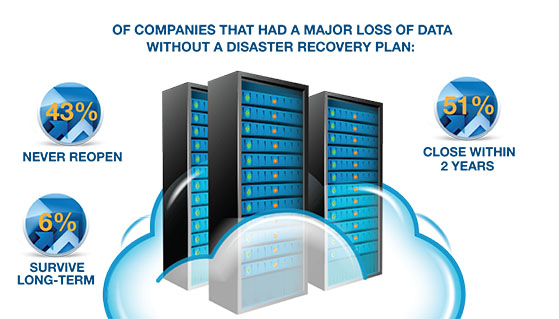
It's apparent that if an organization does not have a disaster recovery strategy in place, it faces obstacles that could sink the company. Putting off disaster recovery planning is to invite real danger: Businesses that have been through a disaster report having lost between $100,000 and $500,000 a day, according to a survey conducted in 2005 by AT&T and the International Association of Emergency Managers.
Did you know?
Also in This Issue
Please Join Us for Our Upcoming
Technology Mixer

Come to the Lightpath Commercial Real Estate Technology Mixer - held in our suite at Madison Square Garden during the Knicks vs. Rockets season opener!
2013 Hurricane Forecast

The upcoming hurricane season could put you either directly or indirectly at risk.
9 Links to Disaster Recovery Resources

We've saved you time by compiling links to disaster recovery-related resources that matter to you.